How to Spot an Inflated Repair Estimate Before You Approve It
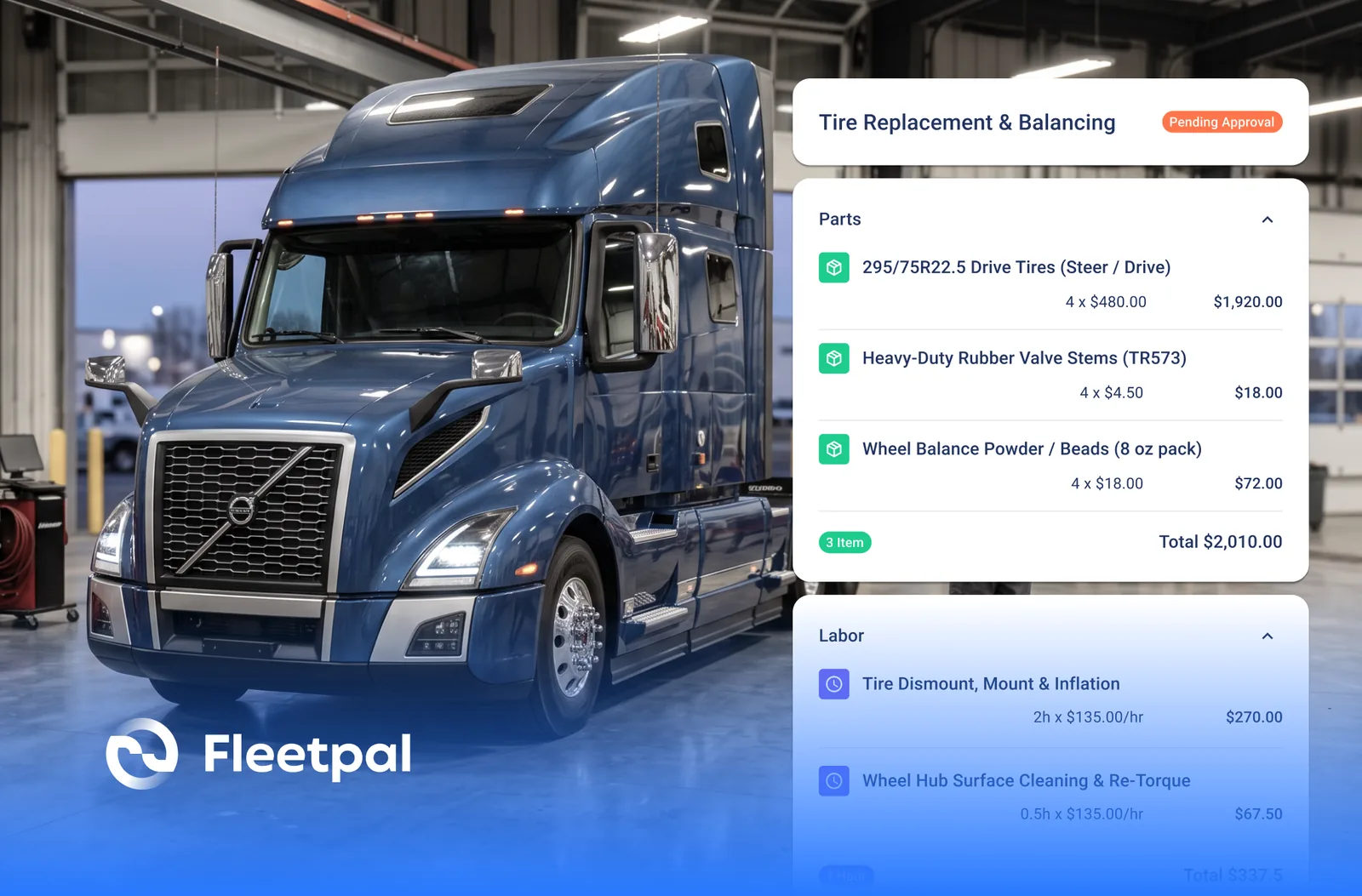
The estimate arrives while the truck is already sitting in someone else's bay. A manager glances at the total, decides it looks about right for a job that size, and approves it. That single moment is where most of a fleet's outside repair spend is actually decided, and it usually happens in under a minute with nothing on screen to compare it against.
Inflated estimates are rarely fraud. More often they are the predictable result of a shop pricing a job for a customer who has no practical way to check. The fix is not suspicion. It is a baseline, a short list of things to look at, and an approval step that happens before the wrenches move. Here is how fleets do that, what goes wrong in real shops, and the question worth asking any software vendor who promises to do it for you.
What counts as an inflated repair estimate?
An inflated estimate is one priced above what the same job costs when it is done straight: padded labor hours, parts marked up well beyond the going rate, bundled lines that cannot be priced individually, or scope that quietly grew after the truck was already apart. The word to hold onto is not "expensive." Heavy-duty repair is expensive. The word is "unexplained."
In Fleetpal, an estimate sits on the vendor work order it belongs to, so the review question stays specific rather than emotional: does this line trace back to the complaint that opened the job? Estimates and supplements are reviewed and approved or rejected before the work proceeds.
What breaks in practice: fleets that judge estimates by the total dollar figure approve bad small jobs and argue about good big ones. A large aftertreatment job can be priced completely fairly, and a routine brake job can be padded to the ceiling. The total tells you almost nothing on its own.
Ask the vendor: "Show me an estimate and the work order it came from on the same record, without opening a second tab."
See where your fleet is losing money
Fleetpal brings inspections, work orders, and PM schedules into one system — so downtime stops catching you off guard. Book a 20-minute walkthrough.
Schedule a demoHow do you know what a repair should cost?
Your own repair history is the only baseline that actually fits your fleet. Published labor guides and industry cost averages do not know your trucks, your duty cycle, your region, or the shops you use. The fleet that can answer "what did this job cost the last four times we did it?" negotiates from a different position than the fleet that cannot.
Fleetpal keeps every repair tied to the asset and to the vendor that performed it, with labor and parts recorded on the work order. That history is what turns an estimate review from a gut call into a comparison.
What breaks in practice: most fleets already own the history and simply cannot reach it in the ninety seconds they really have. It lives in an email thread, a filing cabinet, or a spreadsheet that one person maintains. A baseline you cannot retrieve while the vendor is on hold is not a baseline.
Ask the vendor: "Pull up the last twelve months of repairs on this asset while I am looking at the estimate."
What are the red flags on a repair estimate?
Five patterns account for most of what fleets find when they start reviewing estimates line by line.
1. Labor hours that do not match the job
Labor is where padding hides best, because an hour looks like an hour on paper. Compare the hours quoted against the same repair in your own history. A job that took four hours twice before and is quoted at seven deserves a sentence of explanation, not a confrontation.
2. Parts priced above what you have paid before
Markup on parts is normal and expected. Markup that moves job to job on the same part number is a question. If you stock the part yourself, the comparison is immediate.
3. Bundled lines you cannot price separately
"Front end repair" on one line with one total is not an estimate. It is a number. Anything you cannot break into labor hours and specific parts cannot be compared to anything, which is usually the point.
4. Scope that grew after the truck was already apart
Supplements are legitimate. Trucks hide their problems until they are opened. The red flag is a supplement that arrives as a revised total rather than as its own itemized request, because that is a second estimate wearing the first one's clothes.
5. The same repair, again, on the same asset
The third coolant leak on one truck in a year is either a diagnosis problem or a workmanship problem, and either way you should not be paying full freight for it a third time. This one is invisible without history, which is why it survives for years in fleets that track repairs on paper.
In Fleetpal, each estimate line is reviewed against the work order before approval, with labor and parts itemized rather than rolled into a single figure, and the approve-or-reject decision is recorded on the work order itself, so the pushback is still there the next time that shop sends a number.
What breaks in practice: the review happens, the red flag gets spotted, and then nobody writes down what was decided. Six months later the same shop quotes the same padded hours because there is no record that anyone ever pushed back.
Ask the vendor: "Show me an estimate broken into labor and parts lines, then show me where my approve-or-reject decision lives on the work order afterward."
Can software automatically flag overpriced vendor estimates?
Not the way the phrase suggests, and this is worth being clear about because it is heavily marketed. No maintenance system knows the fair market price of a specific repair on a specific truck in your region this week. What good software does is different and more useful: it puts your own cost history next to the estimate at the moment of approval, itemizes the estimate so the comparison is possible at all, and rolls spend up by vendor so the outliers become visible over time instead of never.
Fleetpal works this way deliberately. Estimates are reviewed line by line against the work order before approval, and because every outside repair carries its vendor and its full cost, spend accumulates per vendor rather than scattering across invoices. The high-cost vendors surface in the numbers instead of in a hunch. The judgment stays with a person, which is the honest description of what the technology can support today.
What breaks in practice: fleets buy the automatic alert, turn it on, get flooded with flags on jobs that were fine, and switch it off inside a month. An alert without a threshold you control and history behind it is noise with a badge.
Ask the vendor: "When you say the system flags an overpriced estimate, show me exactly what triggers that, where I set the threshold, and what data it compares against." If the answer is vague, the feature is a slide.
How do you standardize a repair approval workflow?
Standardizing approvals is not a technology problem first. It is three rules applied without exception: nothing gets worked on without a written estimate, every estimate has one named approver, and every approval and rejection leaves a record. Fleets that hold those three lines get most of the benefit before any software is involved.
Where software earns its place is in making the standard path the easy path. In Fleetpal, outside repairs follow one sequence, estimate to approved to invoiced to paid, with the approval or rejection recorded on the work order and the purchase order, invoice, and payment tracked against that same record through to closed.
What breaks in practice: approval by phone call. A manager says "go ahead" from the roadside, nobody writes it down, and the invoice arrives four weeks later with a number nobody remembers agreeing to. The dispute is unwinnable because the fleet has no version of events on paper.
Ask the vendor: "Show me a rejected estimate and prove the rejection is still there six months later."
Who should be allowed to approve a repair estimate?
Fewer people than currently can. The useful separation is between who needs to see maintenance information and who is allowed to commit money, and in most fleets those two groups have quietly merged because everyone shares a login. Approval authority is worth treating as a deliberate configuration rather than a side effect of account setup.
In Fleetpal, approving an estimate is a permission a role either has or does not have. A read-only role can open every work order and see every estimate without being able to approve one, and the role builder lets you decide which roles carry approval authority at all. The Fleetpal 3.0 release notes cover how that access control is set up.
What breaks in practice: the shared account. When three people use one login, the audit trail says the work order was approved, but not by whom, and the standard collapses the first time it matters.
Ask the vendor: "Show me a role that can open every work order and approve none of them."
How do you compare maintenance costs between vendors?
Comparison requires that every outside repair record the vendor that did it and the full cost of the job, labor and parts separated. Without the vendor on the record, spend scatters across invoices and no comparison is possible. With it, the analysis is arithmetic rather than investigation.
Fleetpal records the vendor and location on every outside repair, and fleet reports break spending down by vendor across labor and parts, filter by date range and asset group, and export to CSV or Excel, which is where the budget conversation actually happens.
What breaks in practice: fleets compare vendors on invoice totals, which rewards the shop that quotes small jobs and punishes the one that handles the hard work. Compare like repairs on like assets, or compare labor rates and parts markup directly, and the picture inverts more often than you would expect.
Ask the vendor: "Break last year's outside repair spend down by vendor while I watch, then export it."
Does consolidating vendor quotes, invoices, and approvals in one system actually help?
Yes, and the reason is narrower than the marketing suggests: reconciliation. When the estimate lives in email, the approval lives in a text message, the purchase order lives in accounting, and the invoice lives in a scanner folder, nobody can answer "was this what we agreed to?" without an afternoon of work. So nobody asks, and the question that would have caught the padding never gets asked at all.
In Fleetpal, estimates, approvals, purchase orders, invoices, and payments are tracked against the work order itself, so the financial trail for a repair reads as one record rather than four systems that have to be reassembled. Vendor management and in-house work run through the same digital work orders, which is what makes the comparison between doing a job inside and sending it out meaningful.
What breaks in practice: partial consolidation. A fleet moves estimates into the system but leaves invoices in accounting, and now there are two sources of truth and a monthly reconciliation meeting that exists only to reconcile them.
Ask the vendor: "Open one closed work order and show me the estimate, the approval, the purchase order, the invoice, and the payment without leaving that record."
What do you do when the estimate is already too high and the truck is apart?
Most of your leverage is gone at that point, but not all of it. Ask for the replaced parts back. Ask which labor guide the hours came from and how the quoted time compares. Approve the portion that is clearly necessary and hold the rest pending an explanation. And record the outcome, because the real value of this conversation is that it changes the next estimate that shop sends you.
The structural answer is to move the decision earlier. Fleets running heavy-duty repair shop software in their own shops, or reviewing outside estimates against their own parts inventory costs, are making the price comparison before authorization rather than after.
What breaks in practice: the fleet wins the argument, saves the money, and never tells the next manager. Six months later, the same shop, the same padded hours, a different approver.
Ask the vendor: "Show me where the outcome of a pricing dispute gets attached to the work order, so it is still there a year from now."
Where this fits in a wider evaluation
Estimate review is one part of how a maintenance system either protects your budget or quietly lets it leak. The same buying discipline applies across the rest of the platform, and the 13 questions fleet buyers ask about work order software covers the demo questions worth carrying into the rest of the evaluation.
None of this requires accusing anyone of anything. It requires knowing what the job cost last time, reading the lines instead of the total, and making the decision before the truck comes apart rather than after. If you want to run these questions against Fleetpal, book a demo and ask them live.
The Fleetpal Team
Fleetpal builds maintenance and inspection software for commercial fleets. Our team works with fleet managers, technicians, and safety directors every day, turning shop-floor and roadside data into fewer breakdowns and lower cost per mile.
Ready to cut downtime and cost per mile?
Walk through a live setup with our team and see what your fleet's data has been trying to tell you.
Schedule a demoRelated articles
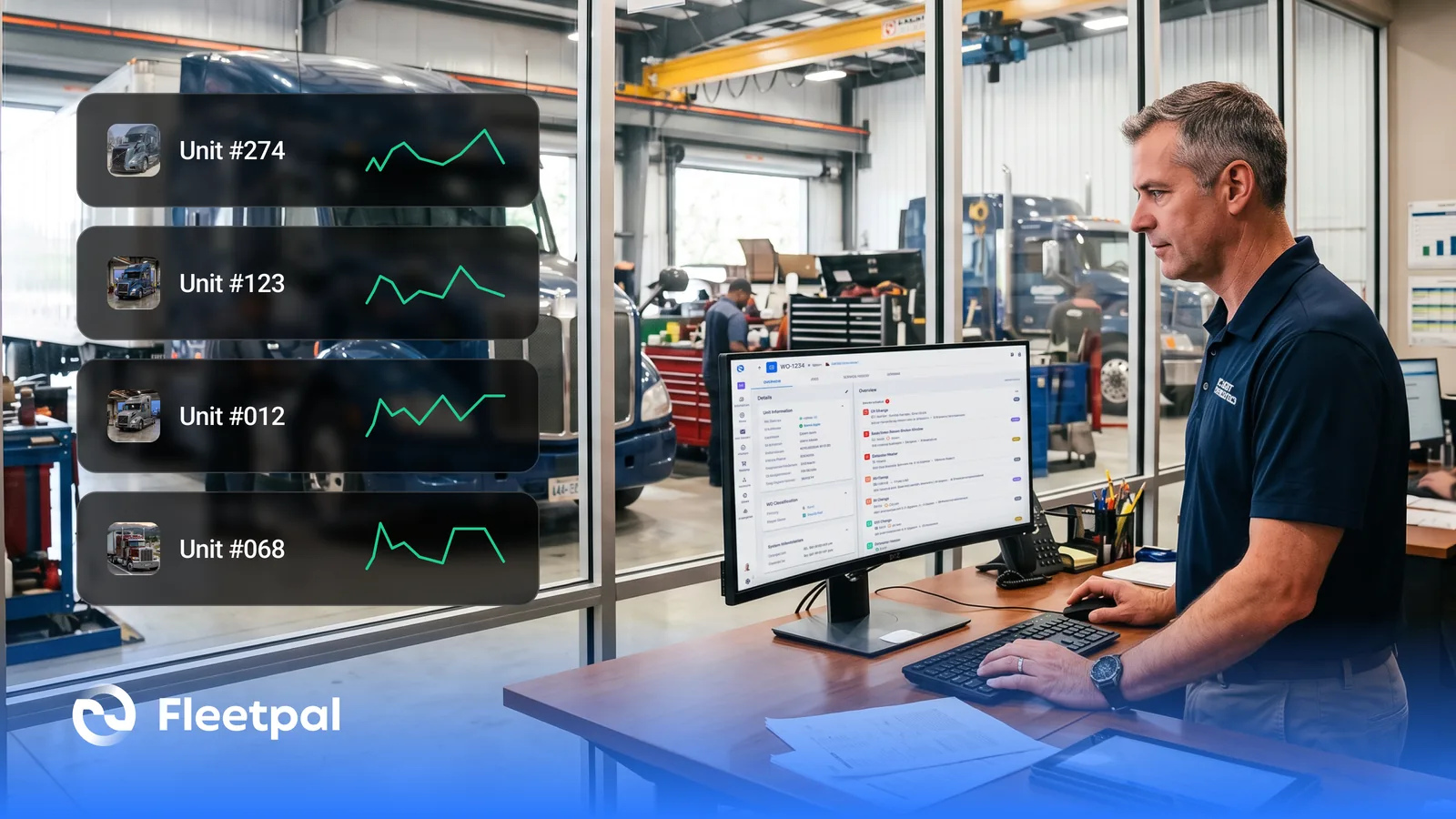
How Fleets Actually Use Maintenance Reports (and What Real-Time Fleet Insights Really Mean)
How fleets actually use maintenance reports, what real-time fleet insights really mean, and what to ask fleet reporting software vendors before you buy.
Read article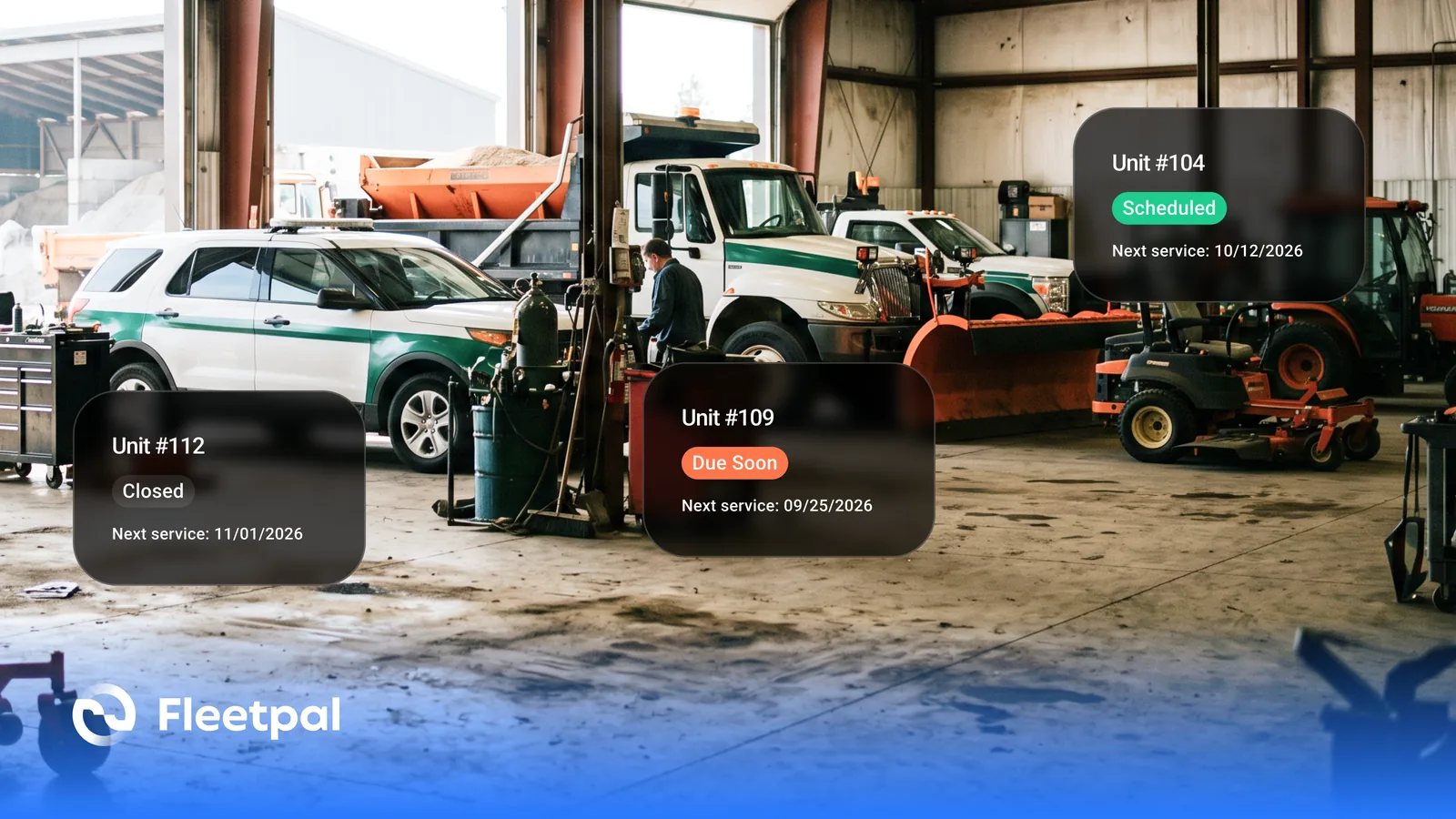
How Cities and Counties Actually Manage Fleet Maintenance (and What Software Has to Prove)
How city and county fleets manage maintenance across departments: PM on the right meter, approvals before spend, audit trails, and what to ask vendors.
Read article
How to Choose Fleet Maintenance Software for Heavy-Duty Fleets (Without a Best-Of List)
The evaluation questions that separate fleet maintenance software vendors: mixed fleets, telematics data flows, work orders, PM triggers, and cost.
Read article
How Fleets Actually Manage Parts Inventory (and Why the Count Never Matches the Shelf)
How fleet parts inventory management actually works: accurate counts, parts tied to work orders, cost per repair, and what to ask software vendors.
Read article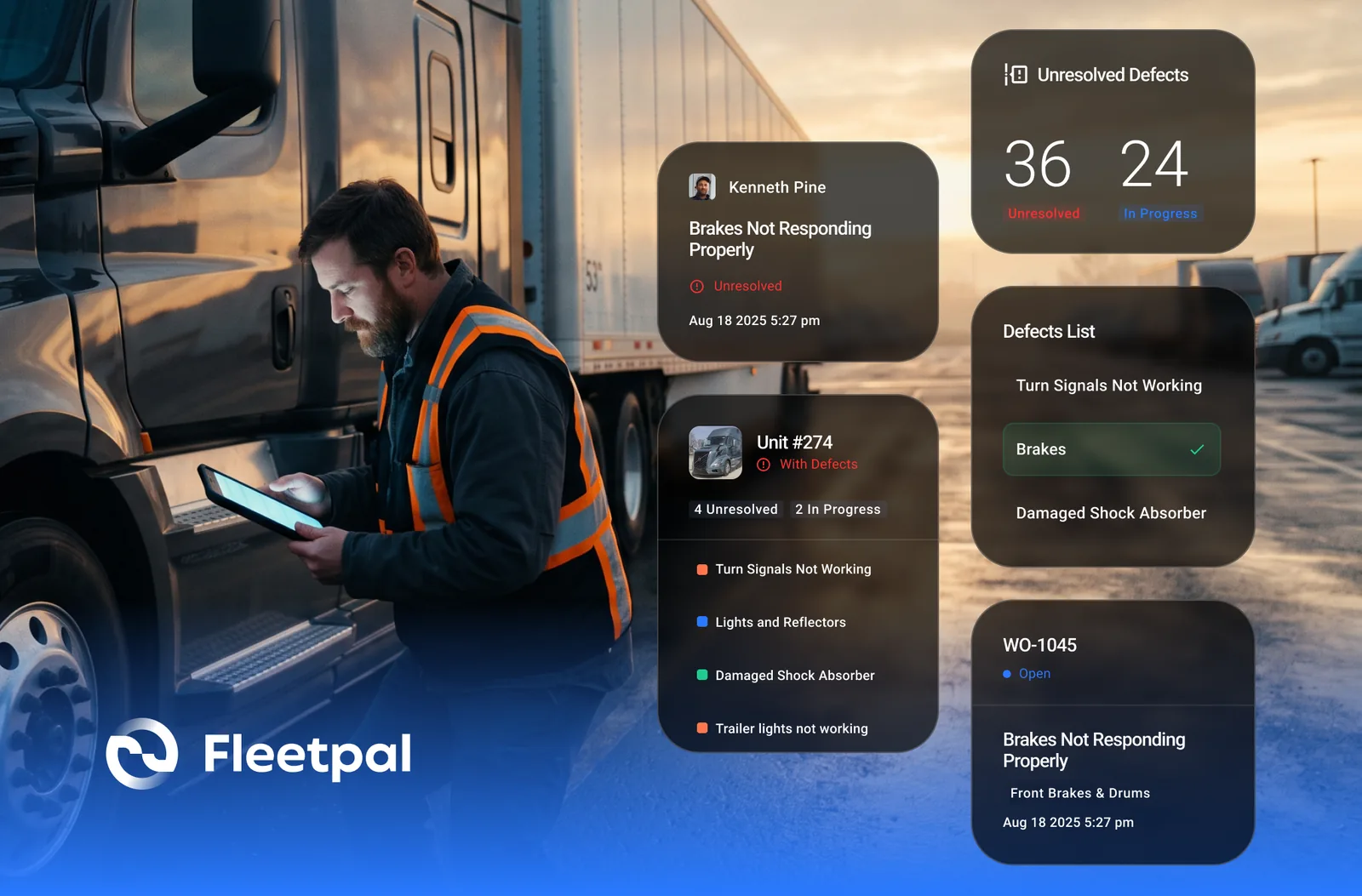
How Failed Inspection Items Become Work Orders (and Why Most Fleets Lose Them in Between)
Converting failed DVIR items into work orders: how the loop should run, where it breaks, and what to ask vendors who integrate inspections and work orders.
Read article